



United States Arizona Red Cliff National Preserve
"Red Cliff National Reserve", located in Arizona near the border of Utah, USA, is famous for its "wavy" red rock formation. This group of cliffs is located in the northern part of Coconino County and is composed of sedimentary rocks that have undergone millions of years of weathering and erosion, and are mostly sandstone, limestone and siltstone. The total area is 294000 acres (about 1190 square kilometers). The Red Cliffs National Reserve is open to visitors with restrictions in three areas: the southern part of Wolf Hill, the northern part of Wolf Hill (including Stone Tao Valley), and the three areas of the Pareya Valley.

WhiteCone Volcano Cone, Arizona
It is a volcanic cone located in northern Arizona. It is formed by volcanic activity, with a unique shape that contrasts sharply with the surrounding mountains and plains. The white volcanic cone is famous for its spectacular appearance, especially when illuminated by sunlight, it appears even more vibrant. BidahochiFormation refers to a geological rock formation discovered in the WhiteCone area. It has unique characteristics and is composed of materials such as gravel, peat, and volcanic debris. Formed in ancient lake and river environments, after millions of years of sedimentation and compression. It has significant importance in both geology and geomorphology.

Hopibouts Volcano Field, Arizona
The Bidahochi Basin, located in northeastern Arizona, is an area composed of approximately 300 volcanic centers, mainly consisting of monogenic volcanoes of the Mie age (about 7 million years ago). These volcanoes are mainly composed of high magnesium basalt and alkaline basalt, indicating that their magma sources may come from the mantle. The Bidahochi Formation records the sedimentary environment of Lake Hopigu and the volcanic records of the Hopibuts volcanic field. The volcanic activity of the Hopibuts volcanic field is closely related to the geological history of the Bidahochi Basin.

SP Crater Crater, Arizona
The official name is "Sh! TPotCrater", which is a volcanic crater located near Flagstaff, Arizona, and is part of the San Francisco Fire Field. It has a history of about 6 million years, during which more than 600 volcanoes were formed. Named after its nearly perfect conical shape and lava flow on one side, this name was given by rancher C. in the 1880s JBabbitt is based on its appearance. It is a volcanic crater surrounded by private ranches, but the landowner allows visitors to visit this well preserved volcanic ash cone and its 4.5-mile lava flow.

Little Colorado River Canyon, Arizona
Located near the Grand Canyon in Arizona, it is a relatively lesser known but equally spectacular natural wonder. Formed by millions of years of erosion, the unique geological structure and colorful rock walls of the Little Colorado River attract nature enthusiasts and adventurers. Although not as large as the Grand Canyon, its depth and narrowness provide a more intimate and unique experience. The rock wall presents various colors such as red, orange, and pink, which are particularly charming at sunrise and sunset. Not only is it a treasure trove of natural beauty, but it is also an important component of Navajo culture.

Lee's Ferry, Grand Canyon, Arizona, USA
It is an important location located within the Grand Canyon National Park in Arizona, USA, marking the starting point of the Grand Canyon section of the Colorado River. Named after 19th century explorer John Wesley Powell, who led the first scientific expedition through here in 1869 to explore the Colorado River and Grand Canyon. It is one of the few places in the Grand Canyon that can be reached all year round, as it is located at the bottom of the Grand Canyon, with a lower altitude and a relatively mild climate. It is a popular fishing spot. The Colorado River rafting journey that begins here is considered one of the most spectacular river journeys in the world.

Map of Grand Canyon and Little Colorado River Canyon
The Grand Canyon is a spectacular canyon formed by the Colorado River cutting through the highlands of northwest Arizona, USA, known for its unique topography and rich colors. The rock layers of the Grand Canyon record different periods of Earth's history, ranging from ancient rocks over 2.5 billion years old to relatively recent volcanic activity. The Little Colorado River Canyon is the largest tributary of the Colorado River in the Grand Canyon, flowing through the Navajo Reservation in Arizona. Known for its gemstone blue water color, which is formed by the reaction of minerals in water with carbon dioxide in the air. It is a natural wonder, and the water color presents different beautiful colors in different seasons.

The confluence of the Grand Canyon and the Little Colorado River in the United States
It is a spectacular natural wonder located in Arizona, USA, formed by the erosion of the Colorado River over millions of years. Known for its deep canyons, colorful rock formations, and unique geological structure. One of the tributaries of the Colorado River merges with the main river in certain areas of the Grand Canyon, forming this unique location. This convergence point is not only the confluence of two rivers, but also a must visit destination for many tourists and nature enthusiasts. The sediment brought in settles on the riverbed, forming a distinct white sandy beach that contrasts sharply with the surrounding red rocks, adding a unique color to the Grand Canyon.

Popular Models

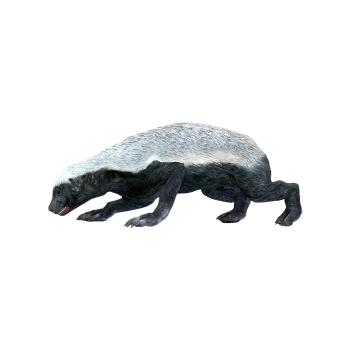
Honey Badger (3D animated model)
192 View

Guinea fowl (3D animated model)
163 View
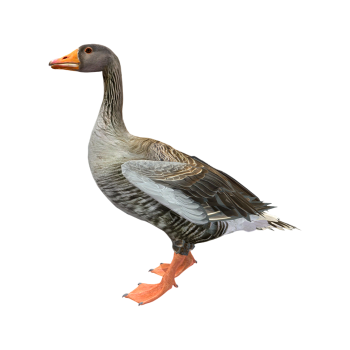
Wild Goose (3D animated model)
185 View
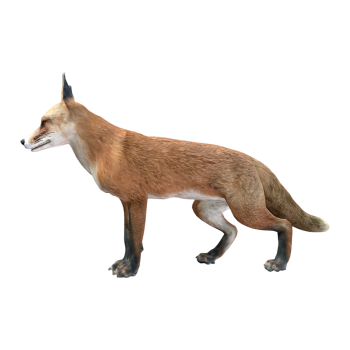
Red Fox (3D animated model)
153 View
Random Model

Japan Olympus OM-1 camera
793 View

Aster (Aster)
579 View

Container Bar
662 View

MICHAEL-KORS Shevel BellaDonna Pumps
875 View

Chain Cat Shark Specimen
512 View


Reebok Nano 9.0 Crossfit sneaker
646 View

Copper Boar Sculpture
459 View

Sodslong (3D animated model)
124 View